
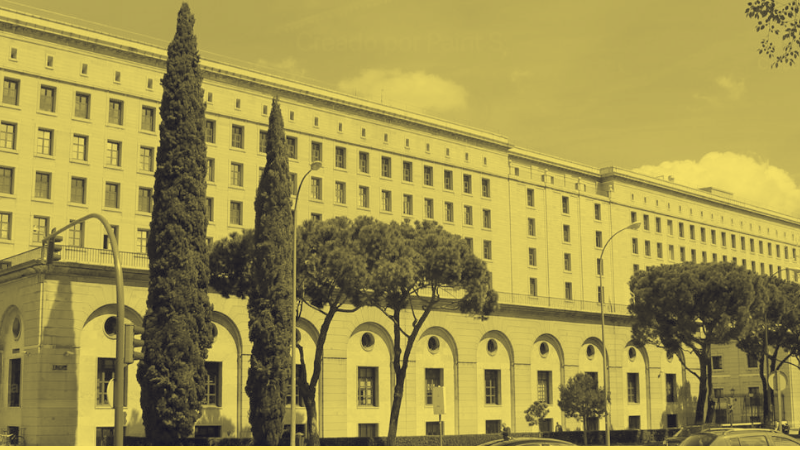
The Third Deputy Prime Minister and Minister for the Ecological Transition and the Demographic Challenge invited Fundación Maldita.es and other organisations to a meeting on Thursday, October 16. We always welcome the opportunity to share our experience in tackling disinformation with public institutions. At the same time, we believe it is important not only to say that we met, but also to explain what we sought to achieve through that meeting. These are the points we raised with Minister Sara Aagesen:
On the legislative framework for tackling disinformation
- The European Union has a strong legal framework establishing the obligations of online platforms regarding disinformation. However, three years after the Digital Services Act (DSA) entered into force, its enforcement by the European Commission remains inconsistent. We urged the Spanish Government to raise awareness in Brussels of the importance of ensuring its effective implementation.
- In Spain, a significant part of the implementation of the DSA depends on granting the country's designated independent regulator, the National Commission on Markets and Competition (CNMC), the powers foreseen under the Regulation. Three years later, Parliament has yet to act, and the European Commission has already initiated infringement proceedings before the Court of Justice of the European Union. We urged the Spanish Government to find a mechanism to grant the CNMC these powers, ensuring Spanish citizens receive the same level of protection under European law as citizens in the rest of the European Union.
- Except in cases involving clearly illegal content, all measures taken to address disinformation on very large online platforms should, as established by the DSA itself, focus on risk mitigation measures that fully respect freedom of expression. Removing content should not be the default response; providing warnings, context and additional evidence should.
On our daily work tackling climate disinformation
- We requested the designation of a dedicated contact person within the Ministry's communications team so that fact-checkers can submit enquiries directly, instead of relying on the general press mailbox, allowing for better follow-up and faster responses.
- We requested that technical staff from the Directorate-General for Environmental Quality and Assessment, the body responsible for environmental impact assessment procedures, be available to respond directly to our enquiries while copying the press office. Many of our questions are highly technical and require direct communication with specialists to avoid losing important nuances that are essential when debunking disinformation.
- We called for greater awareness among the communications teams of agencies and bodies under or linked to the Ministry, such as the river basin authorities, about the role of fact-checkers and the importance of providing timely and detailed responses to our enquiries.
- Improving transparency during public consultation processes
- We requested a more transparent and user-friendly system for accessing documentation relating to projects undergoing public consultation. We called for the creation of a unified, accessible source of information on Spain's electricity generation facilities, allowing users to consult power plants and their characteristics. Currently available sources are either incomplete or difficult to use.