
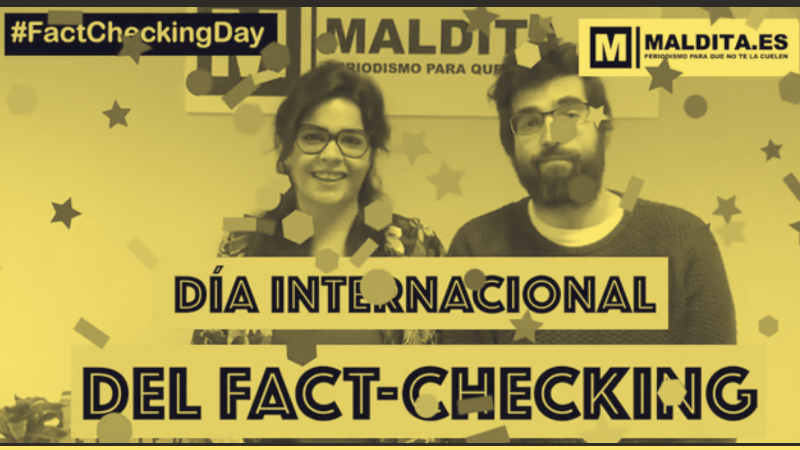
We want to take this opportunity to tell you how we work and introduce you to all the colleagues who, every day, debunk the hoaxes you send us. Clara Jiménez and Julio Montes invite you to get to know better the work we do in the Maldita.es newsroom:
The work of Maldito Dato
Do you know that moment when a politician’s numbers don’t add up? We are here to make sure you have the correct figures. Other times, politicians say one thing and do another. And yes, we are also there to check that. How do we verify all these data? Sergio Sangiao and Rubén Díaz explain it here with some examples, such as the false figures and misused data by Pablo Casado about the economy under the PSOE government or the statements by Carmen Calvo claiming that Congress had approved Franco’s exhumation on three occasions and without any votes against, showing how Maldito Dato works:
But sometimes stories require information that is not publicly available. In those cases, we make use of the Transparency Law, thanks to which we can tell stories such as that former presidents receive a lifelong allowance for “office expenses” that they do not have to justify. Nacho Calle explains how these stories are worked on:
Debunking Malditos Bulos
By the way, does the hoax about yellow ribbons removed by Madrid residents ring a bell? Do you want to know how we debunked one of the hoaxes with the greatest impact in recent days? Fermín Grodira and Natalia Diez tell you about it:
Did you know that a third of the potential hoaxes we receive are related to immigration? And the most common ones are linked to the supposed benefits that immigrants receive to the detriment of Spaniards. Yuly Jara and Andrés Jiménez tell you how we debunked the claim that immigrants have easier access to benefits than Spaniards.
Key dates increase the circulation of hoaxes: as elections approach, more hoaxes appear related to sensitive political issues such as immigration or Catalonia, and around 8 March the main protagonists were sexist hoaxes. Laura del Río and Adela Vived tell you how Maldita.es debunked the hoax about an assault allegedly carried out by “feminazis” that was spread by Vox:
At Maldita Ciencia we also have plenty of work debunking hoaxes. Sometimes, some of them are related to misinterpreted studies, such as the case of the supposed semen allergy that Rocío Pérez and Laura García Merino explain here:
Join our fight against lies
Many of the previous hoaxes reached us thanks to malditas and malditos who sent us those supposed “pieces of information” that seemed suspicious to them. What can you do if you come across something that sounds a bit strange? David Fernández and Bea Lara explain it to you:
We hope you take advantage of this International Fact-Checking Day to join us — we’re counting on you in our fight against lies! Because together it’s harder for them to fool us.