
As we already did in the previous general elections, the regional and municipal elections and the Andalusian elections, we will be very attentive during the debate to tell you, in real time, what is true and what is false in what the main politicians in this country are saying.
How can you follow our fact-checks during the debate?
- On the Twitter account of Maldito Dato.
- You will be able to read our fact-checks in the political minute of eldiario.es during the debate.
- If you have downloaded our Maldita App, you will be able to access live updates of the fact-checks we carry out.
- The following day we will tell you about the lies we caught on Julia en la Onda on Onda Cero, on Gente Despierta on RNE, on Carne Cruda, and on 120 minutos on Telemadrid.
How do you fact-check an electoral debate live?
The Maldito Dato team, experts in political fact-checking, led the team in the previous debates. They are the ones who listen every day to politicians’ statements, so they are the ones who best know the topics candidates usually talk about and the data they tend to use – whether false or not – and they have databases prepared to speed up the verification process as much as possible.
We listen carefully to what politicians say to catch their statements on the spot. When we detect a figure or a claim that sounds suspicious or that we have heard before, the coordinator of Maldito Dato assigns that statement to a reporter, who transcribes it literally into a spreadsheet and we check whether it is verifiable.
Once the sentence has been transcribed literally and we see that it can be verified, we begin the verification process. A member of the team investigates the possible disinformation. With data, facts and arguments, they demonstrate the falsehood or truthfulness of the candidate’s statement. During the process, we consult primary sources, verify the origin of the information and cross-check with official databases. If necessary, we also contact experts on the subject in question to clarify any doubts that may arise and political parties to learn their approach or point of view.
If the data and facts show that the candidate’s claim is false or needs context, the reporter writes the piece providing all the sources and as much detail as possible. Once the falsehood or the need for context of the candidate’s statement is considered proven, the reporter assigns one of the three possible categories used by Maldito Dato: “false”, “false but…” or “true but…” as defined in our methodology.
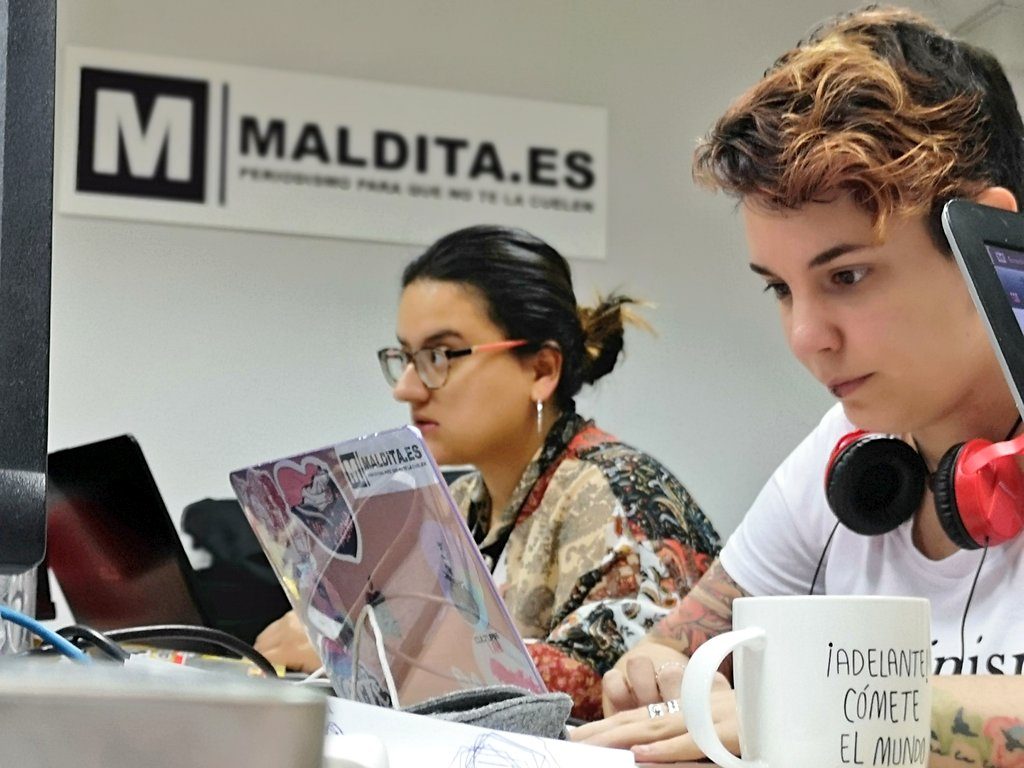
That fact-check is sent to the coordinator of Maldito Dato, who carries out a second verification, requests any necessary clarifications and modifies whatever is needed, including the category of the fact. Afterwards, the piece is sent to the editor-in-chief, who carries out a third and final verification with the same characteristics as the previous one. When the three levels of verification have been completed and the team agrees, the fact is ready to be published.
If during this process we detect a statement that is true without the need to provide additional context or information, all the details are sent to the coordinator of Maldito Dato who, if there are no errors, assigns the category of “true” internally and we continue listening to the debate because we do not publish statements that are true, as we assume that politicians, as a rule, are supposed to tell us the truth.