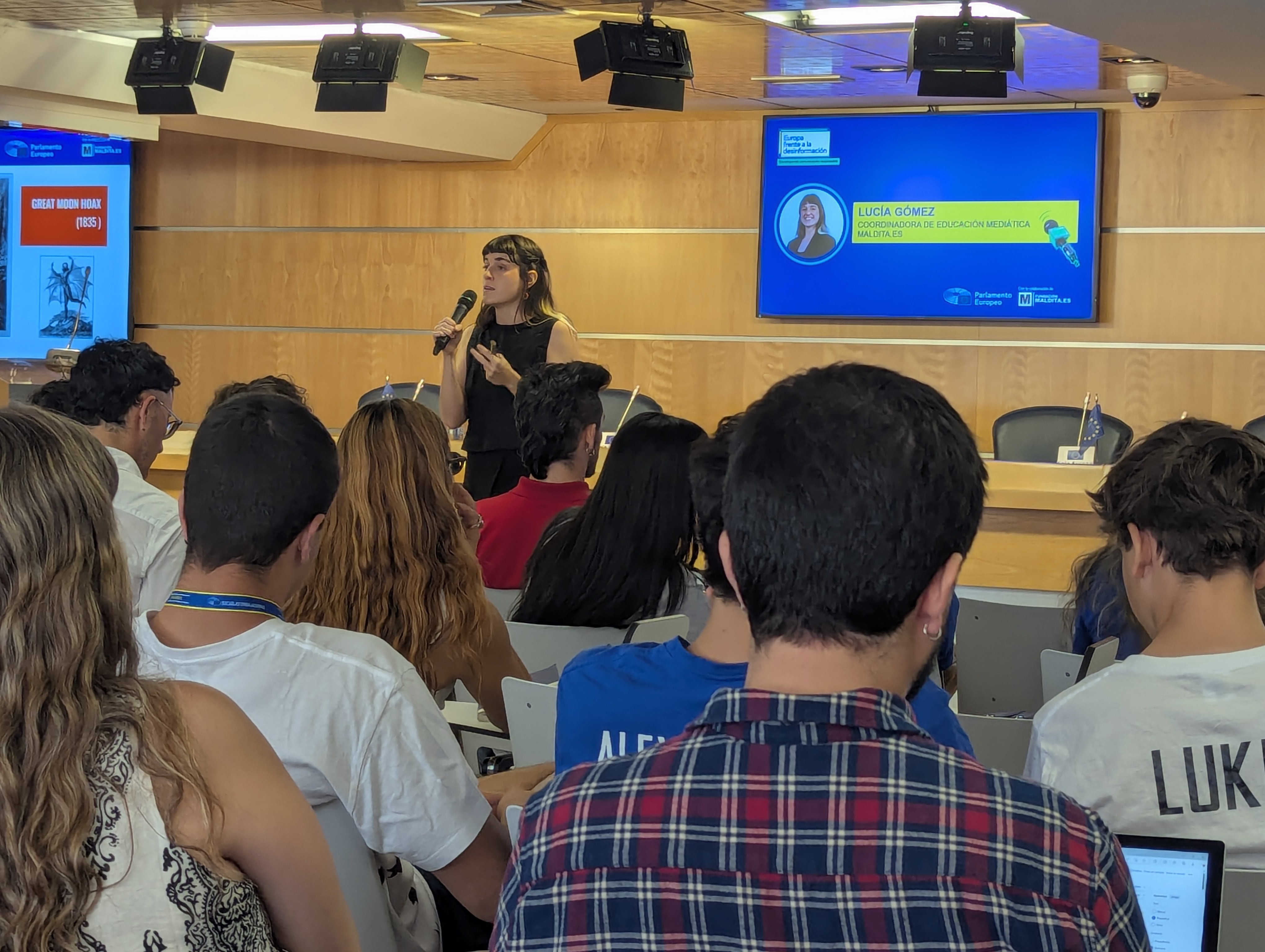

From March 2025 to January 2026, the European Parliament Liaison Office in Spain, in collaboration with Fundación Maldita.es, implemented the training series “Europe Against Disinformation”, a program aimed at journalists, young people, and communication teams from civil society organizations. The initiative sought to strengthen participants’ ability to identify, analyze, and counter disinformation narratives, especially those related to the European Union, its institutions, and democratic processes.
The program was launched in response to growing concerns about the impact of disinformation on public debate. Over the course of the series, seven training sessions—both in-person and online—provided tools and strategies to identify misleading narratives, promote informational integrity, and improve citizens’ understanding of EU initiatives to combat disinformation.
The sessions were structured around a pedagogical approach tailored to each group, combining theoretical content, real-case analysis, practical exercises, and spaces for participant exchange. Topics included identifying false information and disinformation narratives, developing critical thinking and media literacy, using digital verification tools, and understanding EU institutional responses to disinformation, including regulatory frameworks such as the Digital Services Act.
The series included three sessions for active journalists, held in A Coruña (March 29, 2025), Sevilla (May 14, 2025), and online (October 1, 2025). In total, 115 communication professionals participated in these sessions, which combined an introduction to EU policies against disinformation with practical verification workshops. Participants worked with methodologies and tools for verifying images and videos, geolocation and chronolocation techniques, digital research strategies, and analysis of disinformation narratives.
The program also included two sessions for young people, one in-person in Madrid (June 6, 2025) and one online (October 15, 2025), with 156 participants. These sessions focused on strengthening critical thinking, understanding how disinformation ecosystems work, and promoting the creation of responsible content on social media.
Finally, the series included two sessions for professionals and communication teams from civil society organizations, held in Madrid (November 28, 2025) and online (January 29, 2026), with a total of 191 participants. These trainings aimed to improve the organizations’ ability to detect, prevent, and respond to disinformation campaigns that could lead to reputational crises and affect their work. Real cases and response strategies used by organizations were analyzed, along with the European regulatory framework and the dynamics of disinformation spread.
In total, 462 people across Spain participated in this initiative, strengthening their skills to identify misleading narratives, promote informational integrity, and contribute to a more critical and resilient information ecosystem.